Complete guide
LOLER thorough examinations: the complete guide.
The Lifting Operations and Lifting Equipment Regulations 1998 (LOLER) require that lifting equipment used at work is examined by a competent person at suitable intervals. This guide explains what that means in practice — the intervals, what a report has to contain, and the defects we find most often on real sites.
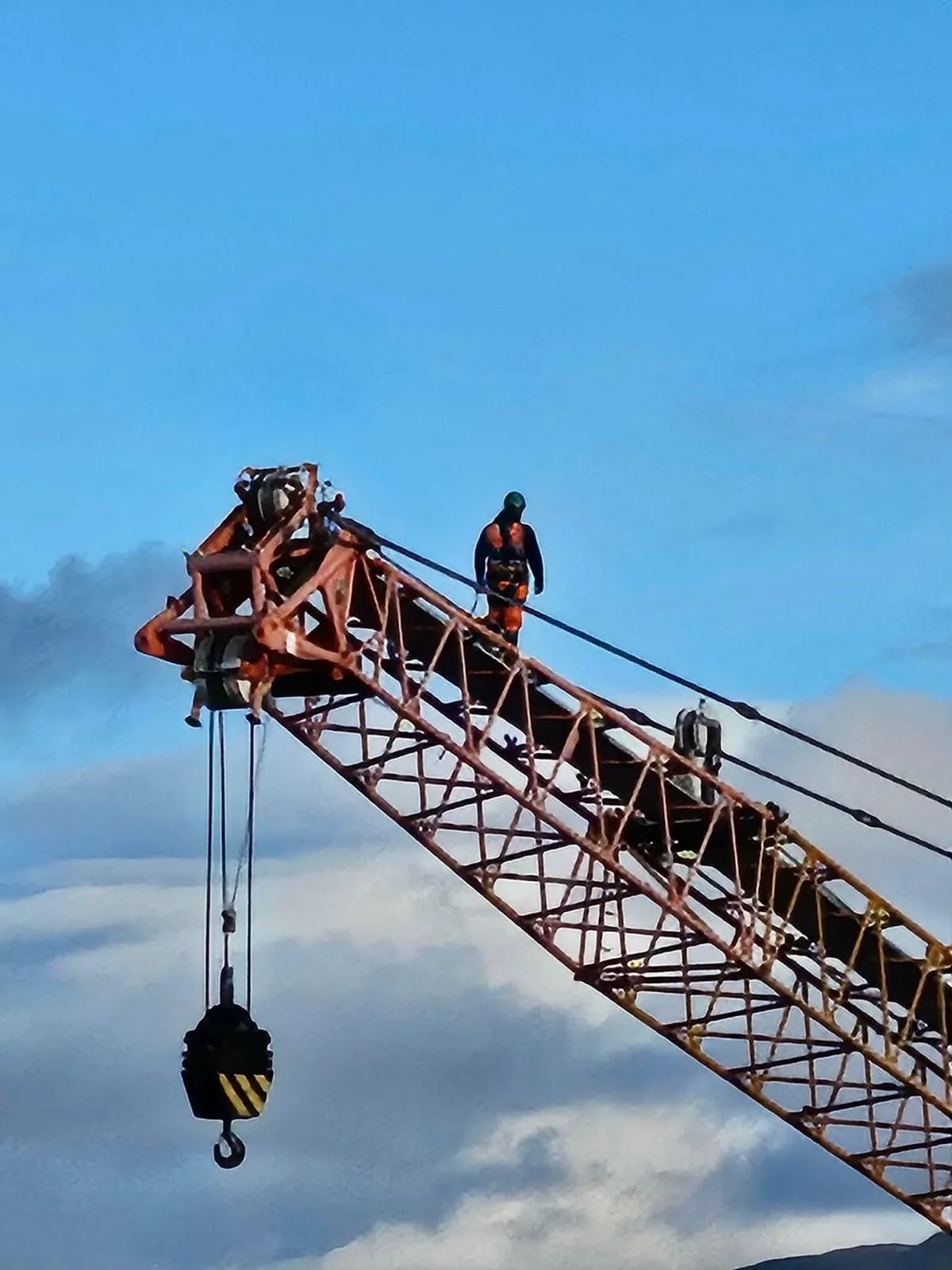
What LOLER covers
LOLER applies wherever lifting equipment is used at work. That includes obvious items such as passenger and goods lifts, cranes, MEWPs, hoists, forklift trucks and vehicle lifts, and it also captures the accessories that connect the load to the machine — slings, chains, shackles, hooks, eyebolts and lifting beams.
The duty holder — usually the employer or the person in control of the equipment — must make sure lifting equipment is strong and stable enough for the job, marked with its safe working load, positioned and installed to minimise risk, and thoroughly examined by a competent person at the right intervals.
Thorough examination is not the same as servicing
This is the single most common misunderstanding we see. Servicing and maintenance keep equipment running. A thorough examination is a separate, formal assessment of safety-critical condition, carried out by a competent person, that must result in a written report.
A maintenance contract or service record does not, on its own, satisfy the LOLER examination duty. The two can be planned to work together, but they answer different questions: maintenance asks "is it working?", while the thorough examination asks "is it safe to keep using, and what needs attention before it isn't?"
How often is a LOLER examination needed?
The regulations set out default maximum intervals, but a competent person can specify different intervals through a written scheme of examination where that is justified by the equipment, its use and its environment.
| Lifting equipment | Typical maximum interval |
|---|---|
| Equipment used to lift people (passenger lifts, MEWPs, hoists) | 6 months |
| Lifting accessories (slings, chains, shackles, hooks) | 6 months |
| All other lifting equipment (cranes, forklifts, vehicle lifts) | 12 months |
| Any equipment covered by a written scheme | As set by the scheme |
Intervals should not be treated as a diary guess. Heavy use, harsh or marine environments, high duty cycles and safety-critical operations can all justify examining more frequently than the default.
Who counts as a competent person?
A competent person has the practical and theoretical knowledge and experience of the equipment to detect defects and judge how serious they are. Crucially, they must also be sufficiently independent and impartial to give an objective opinion — which is why a thorough examination is best kept separate from the company that maintains or supplies the equipment.
City Inspection Services is owner-operated by Sean Crawford EngTech MSOE MBES (Owner and Principal Engineer Surveyor), a registered engineer surveyor and member of the Society of Operations Engineers and the Bureau of Engineer Surveyors. You can read more about the engineer who carries out and signs the reports.
What equipment needs a LOLER examination?
If it lifts a load at work, LOLER is likely to apply. We produce dedicated guidance for the equipment we examine most:
Some equipment sits at the overlap of two regimes — a forklift truck needs LOLER for its lifting function and PUWER for its wider condition, controls and safe use. See PUWER vs LOLER for how the two fit together.
What a report of thorough examination must contain
The report is the evidence. A useful LOLER report identifies the equipment and its location, records the date of examination, describes any defect that is — or could become — a danger, states the date by which a defect should be put right, and gives the date of the next examination.
We write reports so the responsible person can act on them: defects are described by severity, location and the practical next step, so it is clear whether an item can stay in service, needs repair, or should be withdrawn.
Written schemes, hired equipment and registers
A written scheme of examination lets a competent person tailor what is examined and how often to the real equipment and its use. It is particularly useful for complex or heavily used lifting installations.
Hired and cross-hired equipment still needs current examination evidence. Confirm who holds the report before the equipment arrives — a gap here is a frequent cause of equipment being refused on site.
Finally, a clear lifting register that separates owned, hired and withdrawn equipment — with safe working loads and ID marks — is what keeps the whole thing defensible when an insurer, auditor or principal contractor asks.
The defects we find most often
Across examinations in Edinburgh, Glasgow and the wider region, a handful of issues come up again and again:
- Unmarked or illegible lifting accessories that can no longer be traced to a safe working load
- Damaged slings, worn hooks, distorted forks, and chains stretched beyond tolerance
- Hydraulic leaks, worn pins and damaged safety devices on lifts and MEWPs
- Small accessories missing entirely from the register — the lift or forklift is examined, but the sling used with it is not
- Overdue examinations caused by unclear asset ownership across multiple sites
What happens if an examination is missed?
Lifting equipment without current thorough-examination evidence should not be used for lifting operations until the position is resolved. Beyond the legal duty, an out-of-date report is one of the most common reasons equipment is stopped on site — so keeping the next-due dates visible is as much about uptime as compliance.
LOLER questions, answered
How often does lifting equipment need a LOLER thorough examination?
As a general rule, equipment used to lift people and lifting accessories are examined every 6 months, and other lifting equipment every 12 months — unless a written scheme of examination drawn up by a competent person specifies a different, suitable interval.
Is a LOLER thorough examination the same as a service?
No. Servicing and maintenance keep equipment working. A thorough examination is a separate, formal assessment of safety-critical condition by a competent person, and it must result in a written report. A service record does not satisfy the LOLER examination duty.
Who can carry out a LOLER thorough examination?
It must be carried out by a competent person with the practical and theoretical knowledge and experience to detect defects and assess their significance — and who is sufficiently independent and impartial to make an objective judgement.
Does hired or cross-hired lifting equipment need LOLER?
Yes. The duty holder must be able to show that hired equipment has current evidence of thorough examination and is suitable for the work. It is worth confirming who holds the report before equipment arrives on site.
What happens if a LOLER examination is overdue?
Equipment without current thorough-examination evidence should not be used for lifting operations until the position is resolved. Overdue examinations are a common reason for equipment being refused on site by principal contractors and insurers.
What must a LOLER report of thorough examination contain?
It should identify the equipment, the date of examination, any defects that are or could become a danger, the date by which defects should be remedied, and the date of the next examination — along with enough detail for the responsible person to act.
Need a LOLER thorough examination, or a second opinion on your register?