From the field - 2026-07-04
We Took 'Working at Height' a Bit Too Literally
Our marketing team was asked to raise the profile of our LOLER inspections. They interpreted the word "raise" rather generously. A mostly-true story, with a serious point at the end.
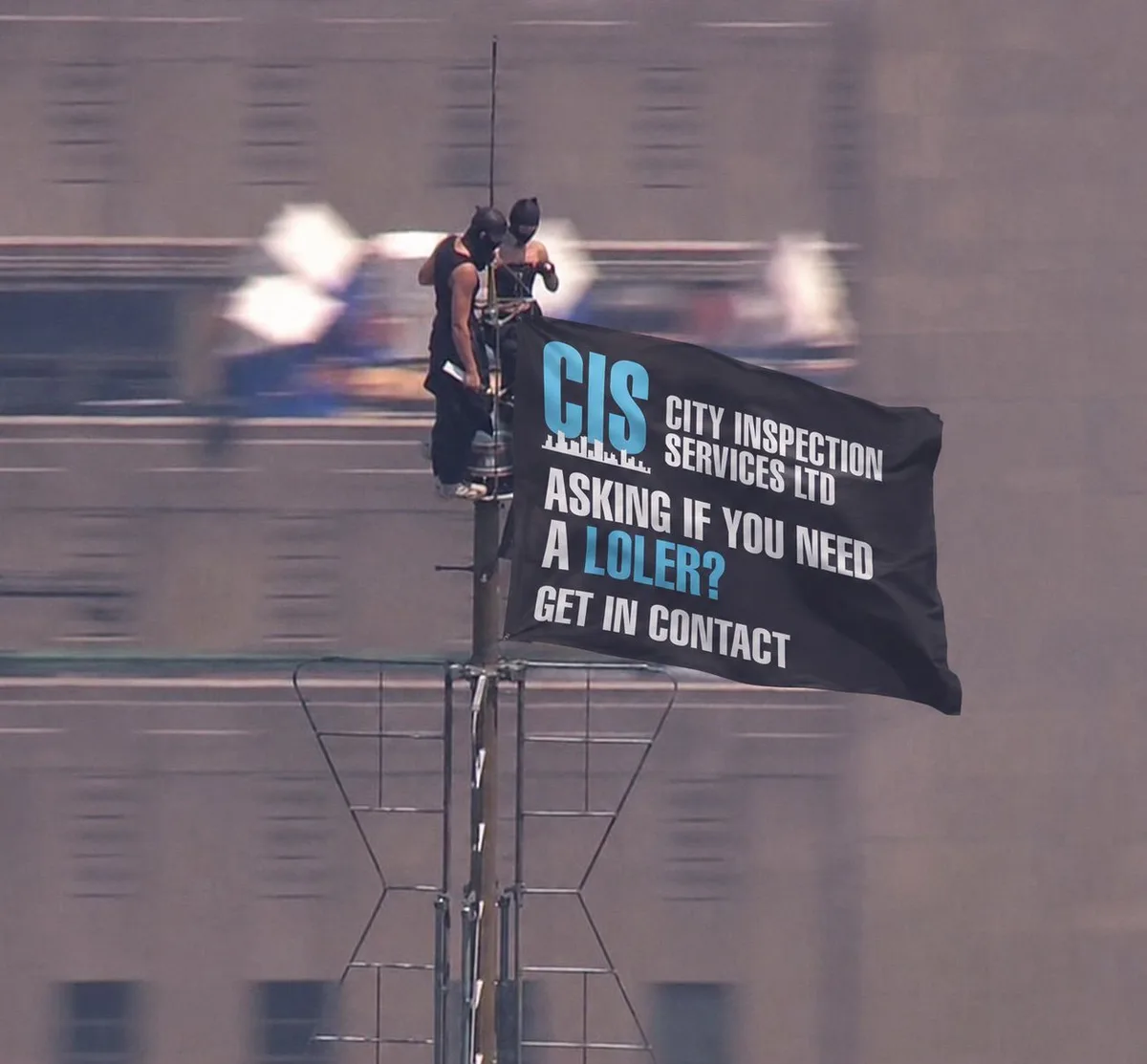
Every business is told the same thing: you need to get your name out there. Put it up in lights. Raise your profile. Somewhere along the way, someone on our team heard "raise" and looked at the tallest structure they could find.
The brief was simple — remind Scotland that if you operate lifting equipment, you probably need a LOLER thorough examination. What we did not specify was the altitude at which this reminder should be delivered. And so a flag went up, higher than strictly necessary, asking the eternal question: "Asking if you need a LOLER? Get in contact."
Now, in the interest of professional honesty, we have to point out the irony. Two people on a mast, no plan, no rescue arrangements, no exclusion zone below — that is precisely the sort of working-at-height situation our engineers are paid to look at and quietly wince over. If a client did this, we would have words. Firm ones.
So consider this the world's most on-brand cautionary tale. Working at height should be planned, supervised, and carried out with the right equipment and a way to get everyone down safely. A flag on a mast is not a method statement.
Here is the genuinely useful bit. If you run passenger or goods lifts, tower cranes, MEWPs, vehicle lifts, hoists, or slings and shackles, LOLER says a competent person must examine them at the right intervals — commonly every six months for anything that lifts people or accessories, and twelve months for other lifting equipment.
You do not need to scale a building to sort it out. Our engineers come to you, in branded hi-vis rather than a balaclava, with test equipment and a tablet, and leave you with a clear report you can actually act on. No climbing required — by you or, ideally, by our marketing department ever again.
For legal and dignity-related reasons, we should confirm that no cranes, masts or marketing managers were harmed in the making of this flag. Please do not recreate it. Please do book your LOLER examination.